
Cloth Diaper Stripping – When and How to Do It Safely
What is cloth diaper stripping?
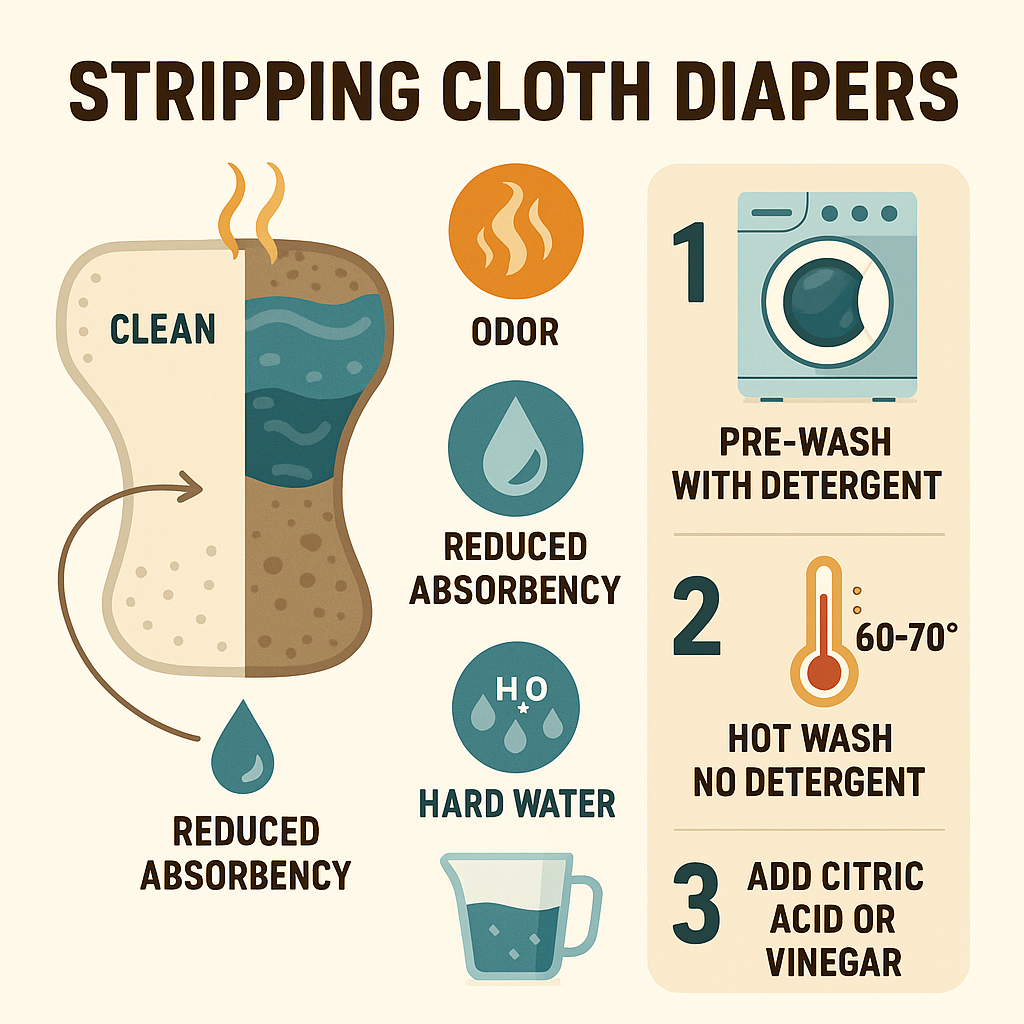
Stripping is a deep rinsing process that removes built-up detergent residues, minerals from hard water, and urine deposits. These can cause unpleasant odors (often ammonia-like) and reduce the absorbency of diaper inserts. If inserts smell bad immediately after washing, it is a clear sign that regular washing is no longer sufficient.
When is stripping necessary?
Stripping should only be done when clear symptoms appear: unpleasant odor after washing, noticeably reduced absorbency, or an ammonia smell after wetting. Preventive stripping every few weeks is not recommended, as it may shorten the lifespan of the fabrics.
What can be stripped?
Only absorbent inserts made of microfiber, bamboo, or cotton should be stripped. Do not strip pocket diapers, covers, or any items with a PUL layer, as high temperatures may permanently damage the laminate.
How to strip cloth diapers step by step?
First, wash the inserts as usual with detergent. Skipping this step may cause deposits to set permanently in hot water. Then place the inserts in the washing machine and run a wash cycle at 60–70°C without any detergent. During the wash, observe the water – the appearance of suds indicates that detergent residues are being rinsed out. If suds are still present, repeat the wash and rinse cycle. If your machine allows it, warm rinsing is recommended.
Citric acid or vinegar – optional
For stubborn buildup, you may add about four tablespoons of citric acid or approximately 70 ml of distilled vinegar to one of the subsequent washes. These substances help dissolve mineral deposits but should not be used regularly, especially with bamboo inserts. Thorough rinsing is essential after use.
Bleach – only as a last resort
If the odor persists despite hot washing, chlorine bleach may be used once, and only for inserts. After bleaching, rinse the inserts several times to remove any chemical residue that could irritate your child’s skin.
How to reduce the need for stripping?
To minimize the need for stripping, avoid using excessive detergent, reduce the dose when washing in hard water, use extra rinse cycles, and avoid fabric softeners. This helps maintain absorbency and freshness for longer.
Summary
Stripping is an effective rescue method for odor and absorbency issues, but it should not be part of routine cloth diaper care. When done correctly, it restores full functionality, but frequent stripping can shorten the lifespan of inserts.
Do you have your own experience with cloth diaper stripping? Write to us – we will gladly publish the most interesting opinions under this article.
Recommended

Insert microfiber + microfleece

Bamboo terry inserts + microfleece

Bamboo terry inserts + microfleece

MINI BOOSTER, bamboo diaper insert, 18x9cm

LONG large diaper insert "Lamb", bamboo, 3 sizes
